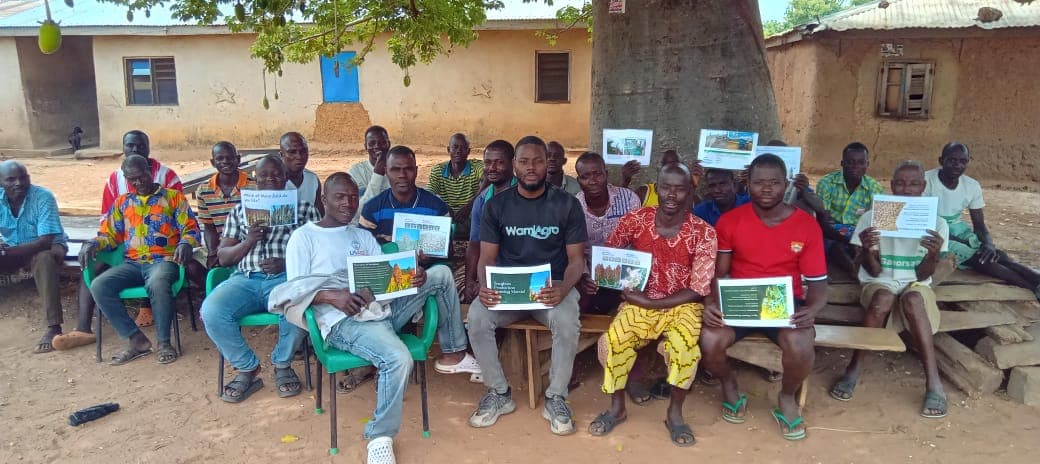
In Diare, smallholder farmers work hard throughout each season, yet a good harvest has not always translated into financial security. Maize is often harvested successfully, but without reliable buyers, farmers in Diare are forced to sell quickly, sometimes at prices far below market value, or risk losing part of their produce to spoilage when markets are not secured in time. This uncertainty affects income, limits savings, and makes it difficult to plan for the next farming season.
Beyond market challenges, farmers also face financial constraints. Savings are often inconsistent, access to credit remains limited, and farmer groups frequently operate without structured financial systems to support growth.
Support and Key Outcomes
Between 2022 and 2023, a more structured intervention was introduced in Diare through WamiAgro, with grant support from the United States African Development Foundation (USADF). The initiative placed a strong emphasis on financial literacy, equipping farmers not just to produce, but also to better manage income, plan ahead, and earn more sustainably from their work.
A total of 346 smallholder farmers were trained. Women made up nearly 60% of participants, strengthening their role in both household and group-level financial decision-making.
Building on this foundation, the project supported the establishment of a Village Savings and Loans Association (VSLA) within a farmer group. Through this structure, members began saving more consistently and accessing credit in a transparent and reliable manner.
In addition, 45 farmer group secretaries received targeted training in savings, credit, insurance, cash flow management, and the effective operation of VSLAs, strengthening their ability to manage group finances and build trust among members.
This financial empowerment was complemented by structured market access. Through WamiAgro, over 1,000 farmers were linked to reliable and profitable markets, significantly reducing post-harvest losses and enabling farmers to earn more from their produce, ultimately improving incomes and livelihoods.
With improved market access and reduced post-harvest losses, aggregated sales revenues increased by over 200%, contributing to increased income for participating farmers.
Farmers began approaching production differently. With stronger financial knowledge, they tracked expenses more carefully, made informed credit decisions, and planned their seasons with intention. Savings groups provided security, reducing dependence on informal and high-risk borrowing.
At the group level, systems strengthened, decision-making improved, and accountability increased. What was once informal evolved into organised, functional financial structures capable of supporting long term growth.
Farmer Perspective: Harunah Issah
For Mr. Harunah Issah, an executive member of his farmer group, the challenges of farming without strong financial systems were all too familiar. Before the intervention, savings were inconsistent and access to credit was limited, making it difficult for farmers in his group to invest beyond each season.
The formalisation of the VSLA has since changed that. With more secure savings and a clearer structure for accessing loans, Mr. Issah and his group are now better positioned to plan ahead, invest in their farms, and expand production, which he sees as critical to improving their income over time.
Conclusion
Through improved financial knowledge and reliable market access, smallholder farmers in rural communities are better positioned to earn more, plan effectively, and strengthen their livelihoods.