.png)
In the farming community of Mbanaayili, where livelihoods depend on the delicate balance of rains, soils, and seasons, farmers like Adam Abdul Latif have long carried the weight of agriculture’s uncertainties. Access to inputs often comes late, ploughing support is inconsistent, and market channels are unpredictable. For years, these challenges have limited how much farmers could produce and earn.
“Most of the time we don’t get support on time… we need seeds, fertiliser, and tractors to plough early,” he says.
Beyond production, marketing remains a major concern. Like many farmers in his community, Adam often struggles to find reliable markets for his produce.
Responding to a Critical Threat
In recent seasons, one challenge became especially difficult to manage, the fall armyworm. The fall armyworm is a pest that spreads quickly across maize fields, and without early detection, farmers are often left to deal with heavy losses.
For Adam, this challenge was all too familiar. He had no reliable way to detect or assess the severity of an infestation early on, often only realising the extent of the damage after it had already taken a toll on his crops.
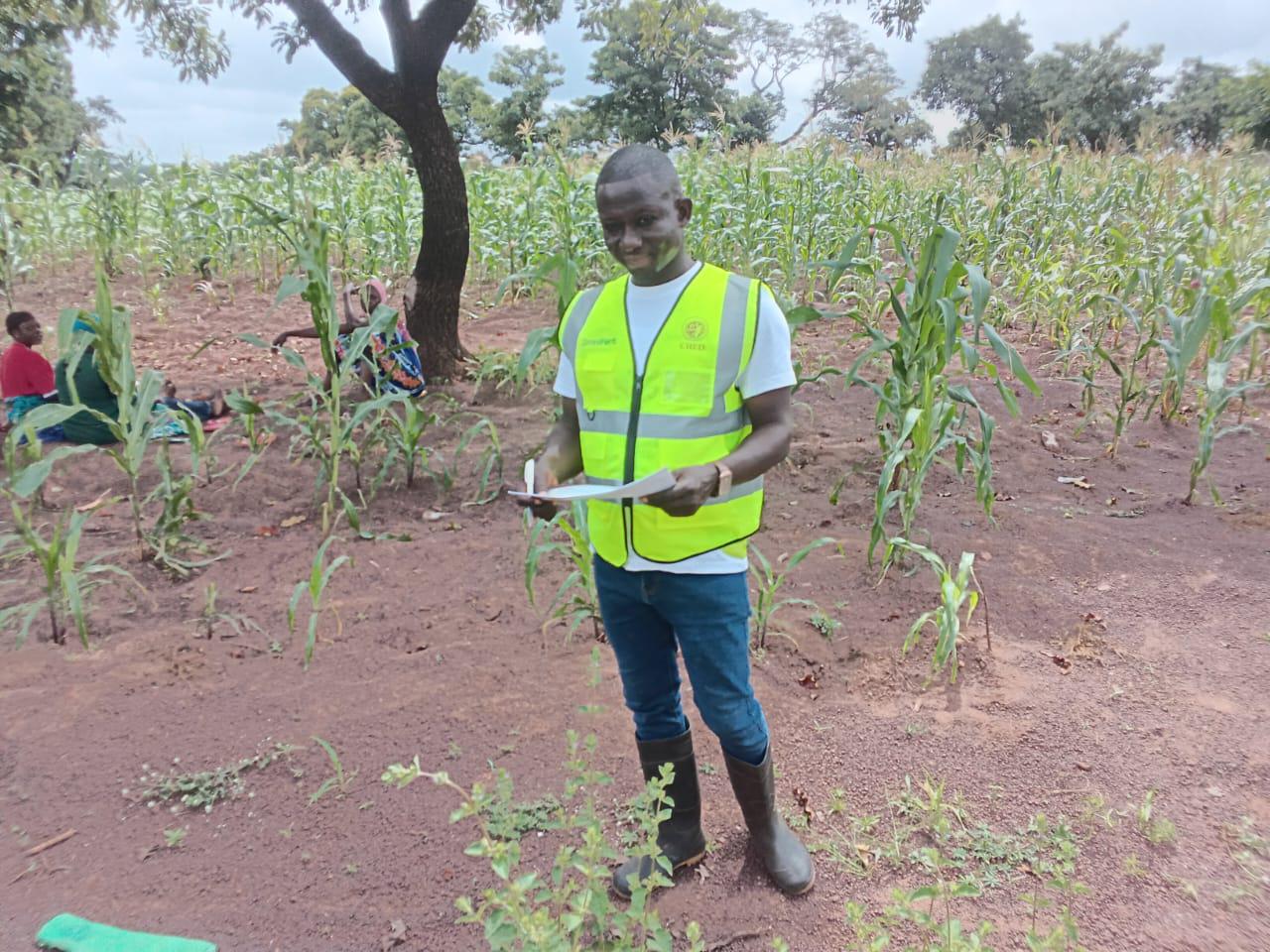
As implementation partners of the Accelerating Impacts of CGIAR Climate Research for Africa (AICCRA) Project in Northern Ghana, WamiAgro distributed and installed pheromone traps to help smallholder farmers detect and monitor the fall armyworm at an early stage.
“We were given traps to set on our farms… it helped us know how serious the infestation was,” Adam explains.
With timely support from WamiAgro, including guidance and access to the right chemicals, Adam was able to respond before the pest spread further across his field.
Support Beyond the Farm
WamiAgro’s support extended beyond pest control.
“They help us get market for our produce, and they organise trainings with us,” Adam says.
Through these trainings, farmers received guidance on good agronomic practices, proper use of chemicals, and guidance on how to access support such as loans to sustain their farming activities.
Impact on Livelihood
Thanks to AICCRA and WamiAgro’s interventions, Adam has already seen tangible improvements in his life. The early detection of the fall armyworm and guidance on pest control allowed him to protect more of his maize crop, reducing losses and securing higher yields. With access to market support and loans, Adam can now sell his produce more reliably, cover household expenses, and provide for his family with greater confidence. These changes have transformed farming from a constant struggle into a source of stability and vision for the future.
Building on these gains, Adam approaches the coming season with optimism.
“My plan this year is that we have them on time to give us loans and other resources… so that at the end, we can sell some and keep some for our family.”
At WamiAgro, we have seen how addressing specific, high-impact challenges like the fall armyworm can change how farmers respond, plan, and produce.
Adam’s experience shows that when farmers are given the right tools at the right time, they are better able to protect their crops, reduce losses, and make more confident decisions about their livelihoods.